Bloodwork and Diagnostics
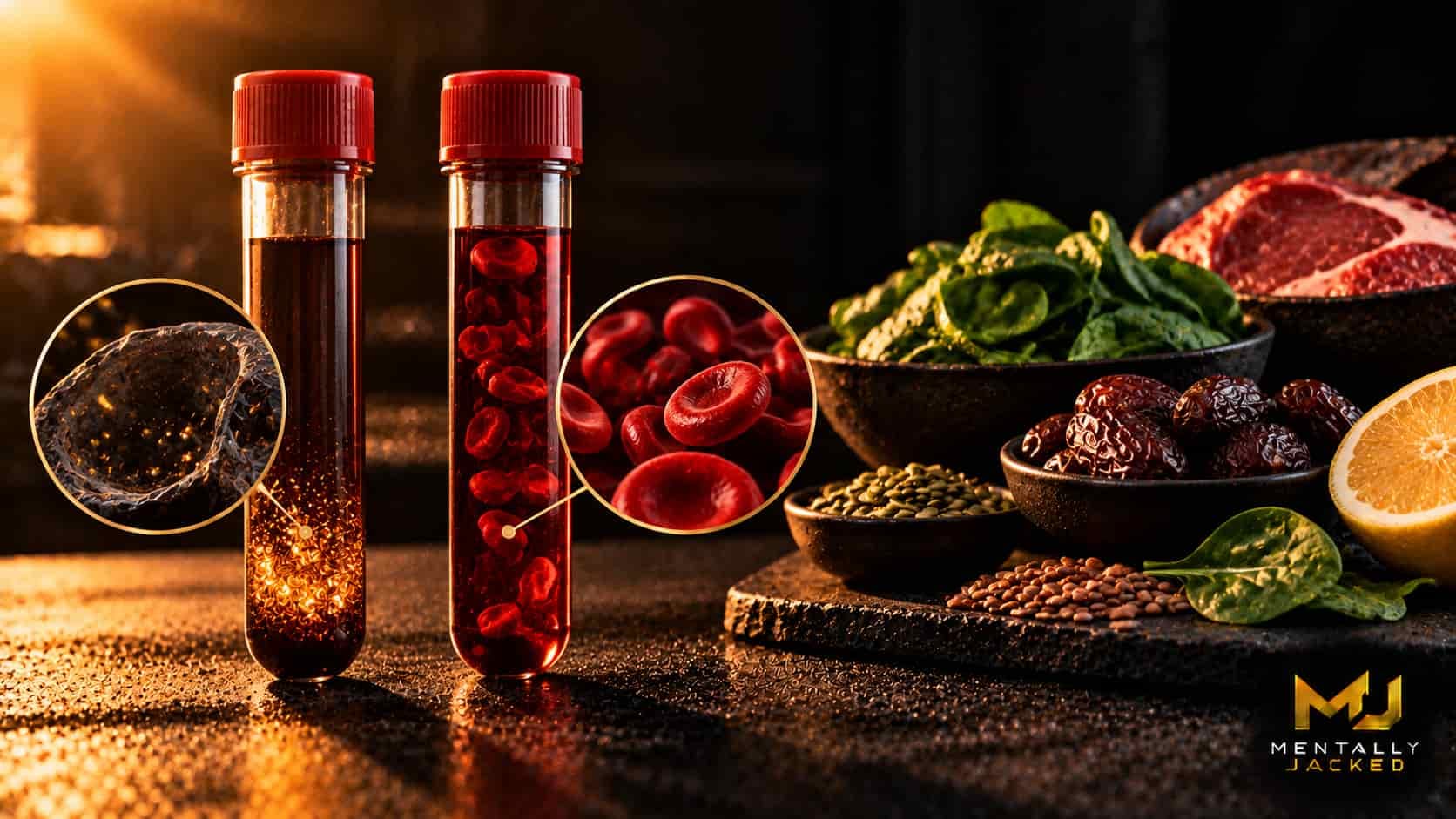
A woman who lifts four days a week gets bloodwork for constant tiredness. Haemoglobin is 12.4, inside the range. The report says normal. Her ferritin is 11, also inside the range on that lab's printout, and nobody mentions it.
She is iron deficient. Has been for a year. The number that would have told her was sitting on the same page as the haemoglobin the whole time, and it was read as normal because the lab's lower limit was written to catch anaemia rather than to describe enough iron for a woman who trains four days a week.
Ferritin is the protein that stores iron inside cells. The small amount in the blood reflects how much is in storage, which makes it the earliest marker of iron deficiency. As a rough guide, each 1 ng/mL of ferritin represents about 8 to 10 mg of stored iron.
Haemoglobin, by contrast, is the last thing to fall. The body protects red cell production for as long as it can by emptying the stores first. By the time haemoglobin drops, the tank has been empty for months.
Most people who feel the symptoms are in the first two stages. There, the standard approach of checking haemoglobin and stopping says nothing is wrong.
Laboratory lower limits for ferritin typically sit somewhere between 12 and 30 ng/mL. Those limits were set to detect anaemia, not to define enough iron for someone who trains.
The WHO defines depleted stores as ferritin below 15. Several sports medicine groups treat anything below 30 as deficient in athletes, and many use 35 to 50 as the target for someone with symptoms. A ferritin of 20 with fatigue, poor recovery and a resting heart rate that has crept up is not normal, whatever the printout says.
The bloodwork analyzer applies athletic thresholds rather than the lab's, and reads ferritin against transferrin saturation and CRP, which is the combination that separates true deficiency from a misleading result.
The most recent National Family Health Survey found anaemia in around 57 percent of women aged 15 to 49 and roughly a quarter of men. Iron deficiency accounts for much of it.
The reasons stack. A largely vegetarian diet provides iron in the non-haem form, of which only a few percent is absorbed, and that small fraction is cut further by everything else on the plate. Phytates in grains and legumes, and tannins in tea taken with meals, block absorption further. Menstrual loss adds a monthly drain. And low intake of vitamin C at the same meal removes the one thing that improves non-haem uptake.
Ferritin alone is not enough, because it also rises with inflammation, infection and liver stress. A normal or high ferritin in someone who is inflamed can hide a real deficiency.
Transferrin saturation below 20 percent with a raised CRP points to deficiency even when ferritin looks acceptable. Saturation above 45 percent with a high ferritin suggests overload and needs investigating, not supplementing.
The blood test selector adds the full panel and CRP whenever fatigue or heavy training is the reason for testing, because ferritin on its own is the test that gets misread.
Food first, for maintenance. Haem iron from meat, fish and liver absorbs several times better than plant iron. For vegetarians: legumes, dark leafy greens, seeds and jaggery, eaten with a source of vitamin C such as lemon or amla, and away from tea and coffee. Cooking in cast iron adds a small amount.
Supplements, for correction. Diet rarely refills empty stores on its own.
Intravenous iron is for severe deficiency, absorption problems, or when oral iron has failed after three months. It works within weeks and is done under a doctor.
Do not supplement iron without a test. Overload is real. Haemochromatosis is not rare. A man taking iron for tiredness who actually has a high ferritin is making things worse with every capsule.
Iron deficiency in a man, or in a woman after menopause, needs a cause found. Blood loss from the gut, coeliac disease and H. pylori are common explanations, and a supplement without investigation can hide something that matters. Any ferritin above 300 in a man or 200 in a woman also needs a proper look.
Ferritin falls long before haemoglobin. Below 30 with symptoms is deficient for anyone who trains, whatever the lab range says. Read it with transferrin saturation and CRP. Correct with 40 to 60 mg elemental iron every other day, retest at three months, and find the cause if you are a man or a postmenopausal woman.
Laboratory ranges often start at 12 to 30 ng/mL, but those limits detect anaemia rather than define sufficiency. For people who train, below 30 with symptoms is deficient and 50 or above is a reasonable target.
Yes, and it is the most common presentation. Ferritin falls first while the body protects haemoglobin. Fatigue and poor recovery often appear at this stage.
Fatigue, poor exercise recovery, breathlessness on exertion, a rising resting heart rate, cold hands and feet, restless legs, hair shedding and difficulty concentrating.
40 to 60 mg of elemental iron every other day, with vitamin C, away from tea, coffee, calcium and antacids. Alternate-day dosing absorbs better than daily. Retest after 8 to 12 weeks.
Ferritin rises with inflammation, infection, liver stress and iron overload. A high ferritin with low transferrin saturation usually means inflammation, while high ferritin with saturation above 45 percent suggests overload and needs investigating.
It can. Testosterone increases red cell production, which consumes iron, and phlebotomy to control haematocrit removes more. Low ferritin with high haematocrit is a common pattern on TRT.
This article is educational and is not medical advice. See the medical disclaimer.
Want a programme built around your own numbers?
Work With Dinesh
Bloodwork and Diagnostics
Bloodwork and Diagnostics
Bloodwork and Diagnostics

Newsletter
One email when a new guide, calculator or breakdown goes live. Nothing else.