Bloodwork and Diagnostics
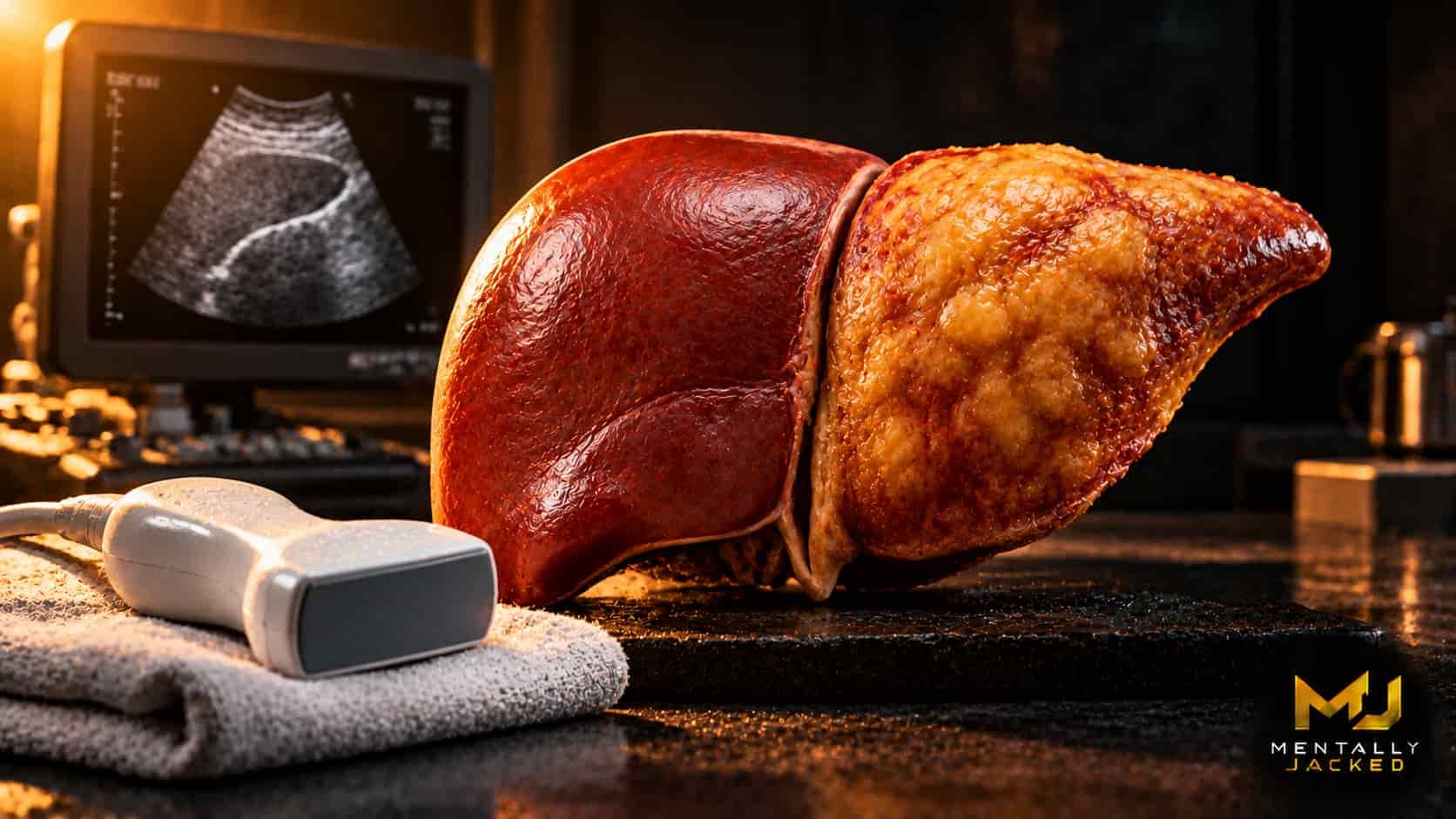
A 2022 meta-analysis pooling Indian studies put the prevalence of fatty liver at around 38 percent of adults. In some urban cohorts it passes half. It is found on ultrasounds ordered for other reasons, mentioned as an aside, and then ignored, because the liver enzymes were normal and nobody explained what it meant.
Left alone, most cases stay mild. A meaningful minority progress to inflammation, scarring and eventually cirrhosis, and the ones that do rarely announce themselves. Here is how to know which kind you have and what actually turns it around.
Fatty liver means more than 5 percent of the liver's weight is fat. In 2023 the condition was renamed from non-alcoholic fatty liver disease to metabolic dysfunction-associated steatotic liver disease, or MASLD, to reflect what drives it: insulin resistance, waist fat and the metabolic pattern that comes with them.
It sits on a spectrum:
The fibrosis stage, not the amount of fat, predicts what happens to you. Two people with the same ultrasound can have completely different outlooks.
South Asians store fat around the organs and in the liver at a lower body weight than Europeans, and carry less muscle for the same BMI. Around one in five Indian cases occurs in people with a normal BMI, the so-called lean MASLD. A diet built on refined carbohydrate and fried food, low physical activity, and a genetic variant called PNPLA3 that is common in the region all push the same way.
That is why waist circumference, not weight, is the number to watch. Above 90 cm in men or 80 cm in women, the odds of fatty liver rise sharply regardless of what the scale says.
The FIB-4 score is the one everybody should know. It uses four numbers you probably already have. Below 1.3 makes advanced fibrosis unlikely. Above 2.67 makes it likely enough to need a specialist. Between the two, a FibroScan settles it. The bloodwork analyzer calculates FIB-4 from a standard liver panel and blood count and flags when the combination suggests scanning, which is the step most people never get told about.
The trap is that liver enzymes are often normal. A person can have significant fat and early fibrosis with an ALT inside the range.
When enzymes do rise, the pattern is usually ALT slightly higher than AST, and GGT raised alongside. The rest of the panel tells the metabolic story: raised triglycerides, low HDL, raised fasting insulin or HbA1c, and often a raised ferritin as a marker of inflammation rather than iron overload.
Fatty liver rarely comes alone, and the blood test selector adds a platelet count and GGT when the reason for testing is a fatty liver finding, so that FIB-4 can be calculated.
Weight loss, specifically loss of waist fat. Nothing else comes close, and the evidence is unusually clear about how much. A 2015 study by Vilar-Gomez and colleagues followed patients with MASH through a year of diet and exercise:
For an 85 kg man, that is 6 to 9 kg. Not extreme, and within reach of a sensible deficit over four to six months.
What speeds it up:
Two medications now carry approval for MASH with significant fibrosis, and neither is for simple fatty liver:
Tirzepatide and retatrutide have shown similar or larger effects on liver fat in earlier-phase work. Pioglitazone and vitamin E at 800 IU a day have older evidence in specific groups and are used under specialist care. None of these replaces weight loss. All of them work better alongside it.
No supplement reverses fatty liver on its own. A few have mechanisms worth knowing:
If you want TUDCA, NAC and curcumin in one product with each dose stated rather than hidden in a blend, God of Supps makes one, Invictus Liver. It is support for a liver under load, alongside waist fat loss, not a substitute for it. Anyone who tells you a capsule reverses fatty liver without changing anything else is selling the capsule.
Oral anabolic steroids modified at the 17-alpha position stress the liver directly, and stacking that on top of existing fatty liver compounds the risk. A FIB-4 and a FibroScan before any oral compound is basic due diligence.
Growth hormone, interestingly, reduces liver fat, which is one reason GH-deficient adults develop fatty liver. That does not make it a treatment. It makes it one more reason to know your liver status before you start anything.
A FIB-4 above 1.3, a platelet count below 150, fatty liver alongside type 2 diabetes, or any symptom such as fatigue, right upper abdominal discomfort, yellowing or easy bruising. Those need a hepatologist, and the sooner fibrosis is staged, the more of it is reversible.
Fatty liver affects more than a third of Indian adults, including lean ones, and normal enzymes do not rule it out. Calculate FIB-4, scan if it is above 1.3, and treat it as a waist fat problem. Losing 7 to 10 percent of bodyweight resolves most cases. Resmetirom and semaglutide exist for MASH with fibrosis, and supplements are support at most.
Yes, in most cases. Losing 5 percent of bodyweight reduces liver fat, 7 to 10 percent resolves inflammation in most patients, and 10 percent or more regresses fibrosis in the majority.
A fibrosis risk score calculated from age, AST, ALT and platelet count. Below 1.3 makes advanced fibrosis unlikely, above 2.67 makes it likely, and values in between call for a FibroScan.
Yes, and it is common. ALT and AST can sit inside the reference range with significant liver fat and even early fibrosis present. Enzymes alone do not rule it out.
South Asians store more fat in the liver and around the organs at a lower body weight, carry less muscle for the same BMI, eat a carbohydrate-heavy diet, and commonly carry the PNPLA3 gene variant. About one in five Indian cases occurs at a normal BMI.
Resmetirom, approved in 2024, and semaglutide, approved in 2025, both for MASH with significant fibrosis. Neither is approved for simple fatty liver, and both work alongside weight loss rather than instead of it.
No. Milk thistle has weak trial evidence. TUDCA, NAC and curcumin have clearer mechanisms, but no supplement reverses fatty liver without waist fat loss.
This article is educational and is not medical advice. See the medical disclaimer.
Want a programme built around your own numbers?
Work With Dinesh
Bloodwork and Diagnostics
Bloodwork and Diagnostics
Bloodwork and Diagnostics
Newsletter
One email when a new guide, calculator or breakdown goes live. Nothing else.