Hormones and Endocrine Health
Cortisol has become the explanation for everything. Belly fat, waking at 3 am, a stalled cut, a bad mood, thinning hair. Search any of those and you will be told your cortisol is high and sold something to fix it.
Sometimes it is high. Far more often the number is normal and the problem is somewhere else. The difference matters, because the fix for real cortisol excess and the fix for poor sleep on a hard diet are not the same thing.
Cortisol is the main stress hormone, released from the adrenal glands on a signal from the pituitary. It raises blood glucose, holds inflammation down, keeps blood pressure up and lets adrenaline do its job. Without it you would collapse. It is not the enemy.
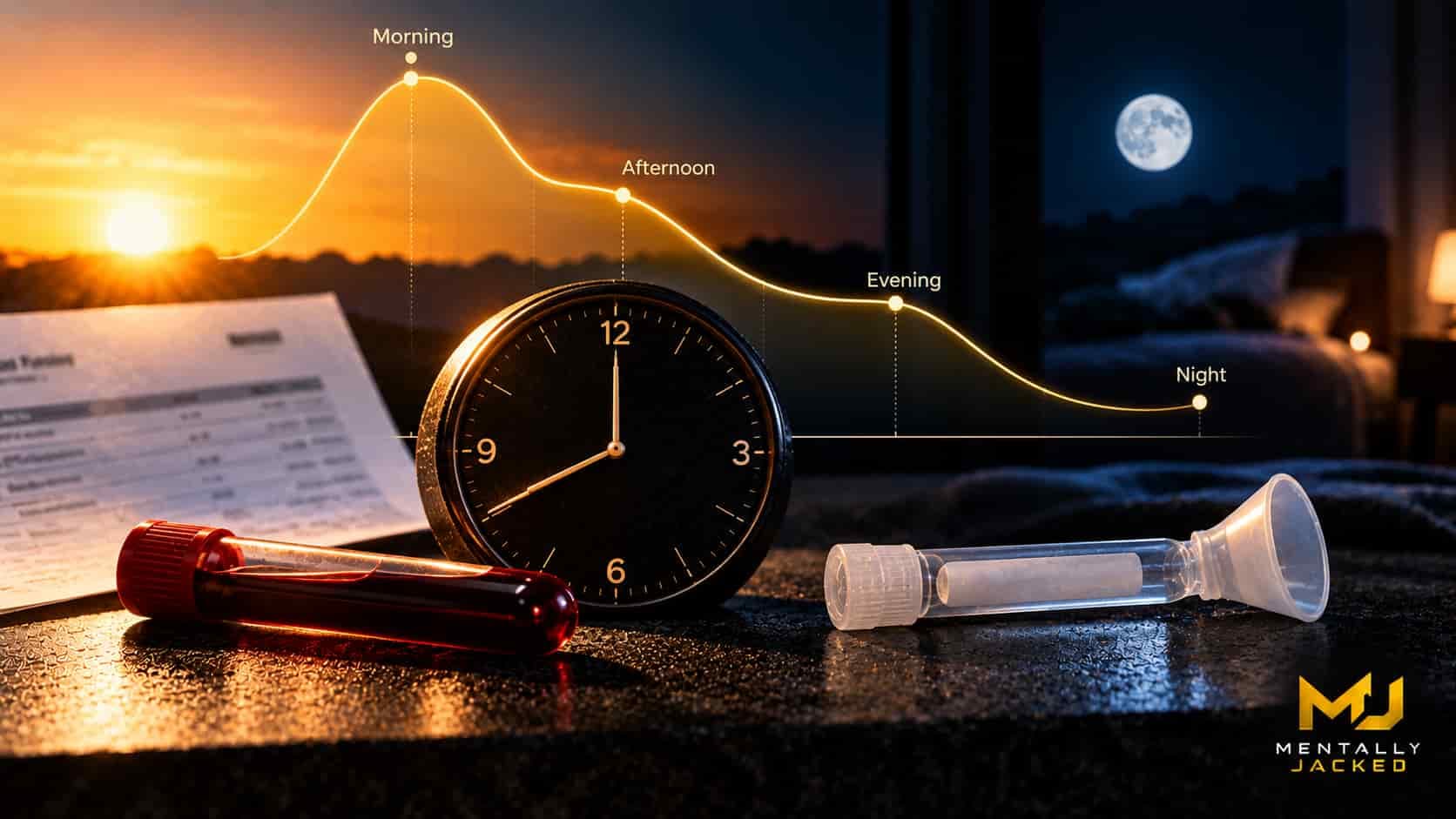
It follows a strong daily rhythm. Levels climb in the last hours of sleep, peak 30 to 45 minutes after waking, then fall through the day to their lowest point around midnight. That rhythm is the point. A healthy pattern is a high morning and a low night. A flattened pattern, where morning is low and evening is high, is what people usually mean when they say cortisol is "off".
The test most people get is a serum cortisol drawn at 8 am. It is a reasonable screen for the two real diseases, Cushing's syndrome and adrenal insufficiency. It is a poor test for the question most people are asking.
Three reasons:
Serum also measures total cortisol, most of which is bound to a carrier protein. Anything that raises the carrier, including oral contraceptives, raises the total without changing what your tissues actually see.
The late-night saliva sample is the most useful one for people who train. Cortisol should be near its floor at 11 pm. If it is not, something is keeping the axis switched on, and that is worth finding. The blood test selector adds the right cortisol test to your panel based on what you are actually trying to find out, rather than defaulting to the morning serum draw.
Belly fat. Cortisol does favour fat storage around the trunk, but the effect in people without Cushing's is small. A calorie surplus and insulin resistance explain nearly all of it. Cortisol makes a convenient villain because it cannot be measured on a food log.
Waking at 3 am. Alcohol in the evening, caffeine after 2 pm, a large late meal and untreated sleep apnoea all produce this. Cortisol rising too early can as well, but it is usually the consequence of those things rather than the cause.
Fatigue. Low ferritin, low B12, an underactive thyroid, poor sleep and an aggressive deficit are all more common causes and all easier to test.
"Adrenal fatigue", the idea that stress wears out your adrenal glands until they underproduce, is not a recognised diagnosis. The Endocrine Society has said so directly. The symptoms attached to it are real. The explanation is not.
Every hard session raises cortisol. That is part of how the body mobilises fuel and starts the repair response. Levels return to baseline within a couple of hours, and in trained people the spike gets smaller over time.
Chronically high cortisol from training is a sign of too much volume with too little recovery, and it comes with the other signs: performance falling on the same loads, resting heart rate creeping up, sleep getting worse despite exhaustion. The progress bottleneck engine works through recovery, sleep and calorie intake before pointing at hormones, because that is the order in which the causes are usually found.
A calorie deficit raises cortisol. A large deficit combined with high training volume and short sleep raises it a lot. This is the pattern behind the lifter who is doing everything right and looks flatter every week: cortisol is holding water under the skin and pulling glycogen out of muscle.
The fix is not a supplement. It is a smaller deficit, a scheduled refeed or diet break, and more sleep. Three or four days of maintenance calories do more for a stubborn cut than any capsule.
What does not work: cortisol "detox" teas, adrenal glandular capsules, and anything sold with a before-and-after photo.
Some symptoms point to a real endocrine problem and need investigation rather than lifestyle changes.
Possible cortisol excess: purple stretch marks wider than a centimetre, a rounded face, fat pad at the base of the neck, weakness in the thighs and shoulders, easy bruising, new high blood pressure or high blood sugar.
Possible adrenal insufficiency: unexplained weight loss, darkening of the skin in creases and scars, salt craving, low blood pressure, dizziness on standing, nausea.
Anyone who has used prednisolone, inhaled steroids at high dose, or anabolic steroids for long periods should know that both extremes are possible and tell their doctor. The bloodwork analyzer reads cortisol alongside glucose, sodium, potassium and thyroid markers, which is how the pattern behind a raised or low result becomes clear.
A single morning cortisol test rarely answers the question. Late-night saliva does. Most symptoms blamed on cortisol are sleep, deficit size, caffeine or alcohol. Fix those first, add ashwagandha if stress is the driver, and see a doctor if the signs of real excess or deficiency are present.
Weight gain around the trunk, a rounded face, thin skin that bruises easily, purple stretch marks, muscle weakness, poor sleep, high blood pressure and raised blood sugar. Mild versions of these are common and usually have other causes.
For a suspected rhythm problem, a late-night salivary cortisol or a four-point salivary profile. For suspected Cushing's syndrome, late-night saliva, 24-hour urine or a dexamethasone suppression test. The 8 am serum test mainly screens for adrenal insufficiency.
It contributes slightly, but in people without Cushing's syndrome a calorie surplus and insulin resistance account for nearly all trunk fat. Lowering cortisol without changing intake does very little.
Trials of KSM-66 ashwagandha at 600 mg per day in stressed adults have shown reductions in serum cortisol of roughly 20 to 30 percent over eight weeks. The effect is real but modest.
It is not a recognised medical diagnosis and no test confirms it. The symptoms people describe are real and usually explained by sleep, iron, thyroid, B12 or a large calorie deficit.
Yes, every hard session raises it temporarily. That is normal and part of adaptation. Persistently high cortisol comes from too much training with too little recovery, sleep or food.
This article is educational and is not medical advice. See the medical disclaimer.
Want a programme built around your own numbers?
Work With Dinesh
Hormones and Endocrine Health
Hormones and Endocrine Health

Hormones and Endocrine Health

Newsletter
One email when a new guide, calculator or breakdown goes live. Nothing else.