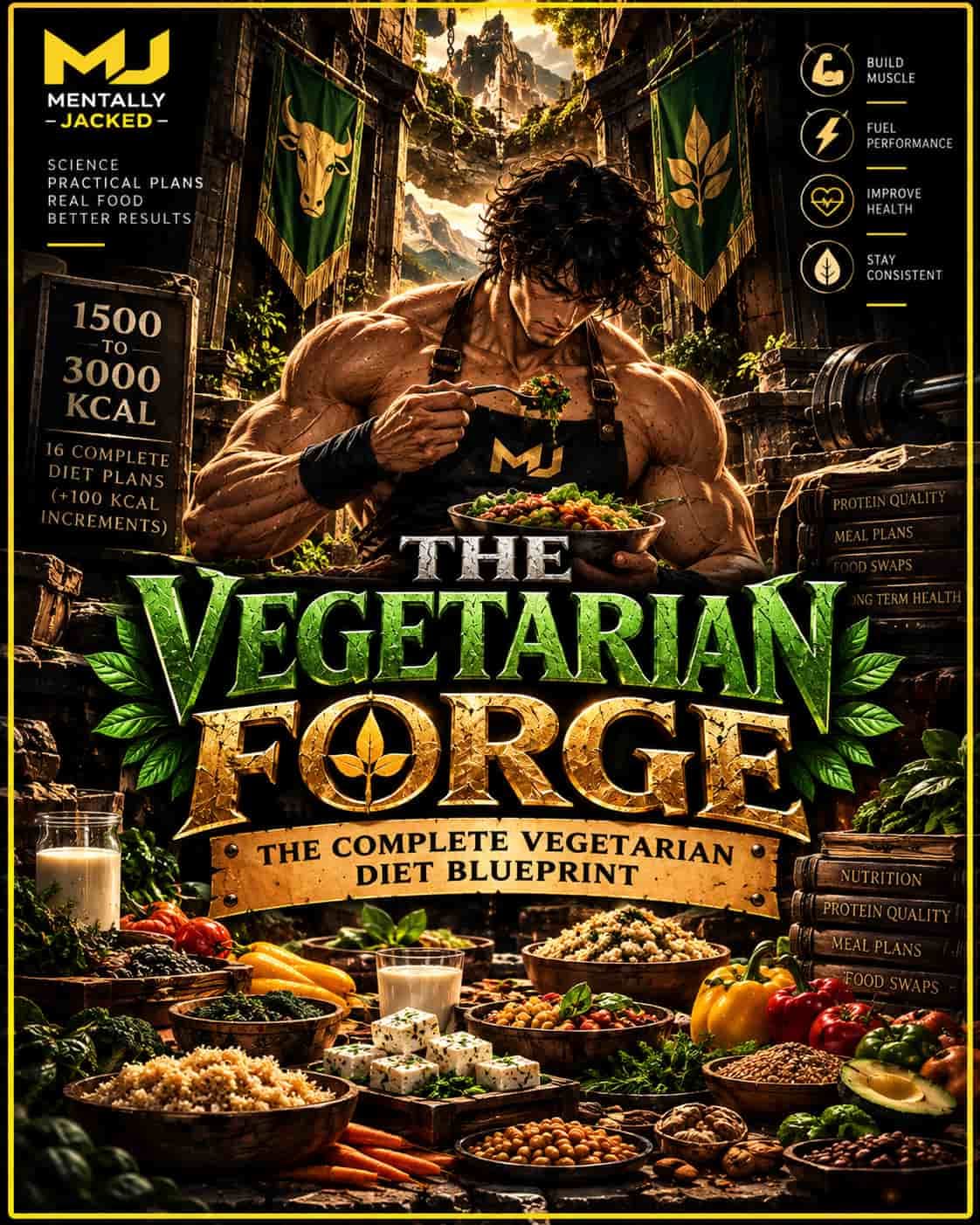
A complete vegetarian and vegan diet system for Indian lifters: building protein without meat, the nutrients to test, and eating big without bloating.
35 min read
The Vegetarian Forge is a complete diet system for vegetarian and vegan lifters who want to build muscle, lose fat or maintain without meat. It is built around Indian food, with sixteen complete plans from 1500 to 3000 kcal, and runs as a loop rather than a menu: pick a starting level, screen your food tolerance, anchor every meal on protein, fix the nutrients a vegetarian pattern actually moves, protect your digestion, then adjust from real-world progress. Vegetarian diets rarely fail because of the food. They fail because a block is missing or the protein block is too thin, and this guide fixes both.
What's Inside
Written for vegetarian and vegan lifters, especially in India, who want to build muscle, lose fat or maintain without meat, and who are tired of plans built around chicken and eggs. It covers dairy-limited, lactose-free, soy-free and vegan paths, and assumes you can weigh food and track bodyweight for two weeks at a time. The plans are templates for healthy adults and do not diagnose or treat lactose intolerance, food allergy, IBS, coeliac disease or any other condition.
Yes, and the rules are simpler than most people think. A complete protein contains all nine essential amino acids in useful amounts; dairy, soy, whey and quinoa qualify, while most single grains and legumes are low in one or two. The fix is to build each day from at least two protein families, such as dairy with legumes or soy with grains. The old rule that rice and dal must be eaten in the same meal to complete each other is not required, because amino acids pool across the day. What matters more is density per meal: plant proteins carry less leucine, the amino acid that switches on muscle protein synthesis, and are digested less completely than whey or milk, so a plant-based meal needs more total protein to hit the same trigger. That is why every plan in the guide anchors each meal on a dense source. The Protein Calculator sets your daily target from bodyweight and goal.
Not every vitamin, only the nine that a vegetarian or vegan pattern actually moves and a lab test can confirm: protein, vitamin B12, iron, zinc, calcium, vitamin D, iodine, omega-3 and selenium. B12 is made by bacteria and has no reliable plant source, so a vegan diet needs fortified foods or a supplement without exception, and serum B12 alone can look normal while tissue levels run low. Iron from plants absorbs poorly and worse with tea or coffee, so ferritin matters more than haemoglobin. Iodine depends on iodised salt and dairy, which is why vegans using rock or sea salt are at real risk, and plant fats supply ALA omega-3, which converts poorly, so algal oil is the vegetarian source of EPA and DHA. The guide's rule is simple: test, do not guess. Vitamin D, iron and zinc should be corrected to a tested number, not taken blindly, and the Bloodwork Analyzer reads the panel.
By raising calories and fibre gradually, because the gut adapts to load over weeks, not days. A vegetarian gain phase can mean a very high fibre intake, and nobody adapts to that overnight. The guide's digestion system covers what actually works: soaking legumes and discarding the water before pressure cooking, keeping heavy legumes like rajma and chole to one meal a day, spreading food across more meals instead of two giant plates, choosing easier carbs like rice and poha during gain phases, and cooking vegetables rather than eating everything raw. If you feel stuffed but the scale will not move, the problem is volume rather than calories, and swapping bulky foods for denser ones fits the same calories onto a much smaller plate. Struggling specifically with bloating? Run the Digestion & Bloat tool before changing anything else. Persistent pain, blood in stool, unexplained weight loss or trouble swallowing need a doctor, not a diet tweak.
Start with an estimate, then let your bodyweight trend decide. The guide's sixteen plans sit one hundred calories apart, and the level you start on is an estimate of what your body uses, not a statement about your goal, so a heavy man cutting and a lighter woman gaining can land on the same plan. The Calorie & Macro Calculator gives a precise starting point, and if the two-week trend does not move the way your goal needs, you move one level and hold again. A four-gate screening then sets your food path, from standard vegetarian to dairy-limited, lactose-free, soy-free, vegan, or vegan and soy-free, and a swap matrix matches every substitution on calories and protein rather than food group, so you can personalise without breaking the plan. Protein powder is treated as a convenience tool for volume problems, not the foundation of the diet.
The full Vegetarian Forge covers all sixteen plans with weighed Indian meals, the screening system, the protein ranking, the micronutrient dashboard with its tests, the digestion survival system, the protein powder guide, the swap engine and a troubleshooting table in detail. Download the PDF for the complete system.
This page and the full guide are for educational purposes only. They are not medical advice or an individual diet prescription. The plans, screening questions and swaps are templates for healthy adults and do not diagnose or treat lactose intolerance, food allergy, IBS, coeliac disease or any other condition. Calorie and macronutrient figures are computed from standard food composition values, and real foods vary. Persistent, severe or alarming symptoms need medical assessment, and supplements for vitamin D, iron and zinc should be guided by blood tests. This content is not for anyone under 18.
Yes, if every meal is anchored on a dense protein source and the day combines at least two protein families. Plant proteins need a slightly higher total to match dairy or whey.
No. Amino acids pool across the day, so combining sources across meals works as well as combining them on one plate.
Usually because fibre and legumes rose faster than the gut could adapt. Soak and pressure-cook legumes, raise fibre gradually, and keep heavy legumes like rajma and chole to one meal a day.
B12 always, plus iodised salt always. Vitamin D, iron and zinc should be supplemented only to a tested blood level, not by default.
This guide is for educational purposes only and is not medical advice.

Newsletter
One email when a new guide, calculator or breakdown goes live. Nothing else.