Hormones and Endocrine Health
Erectile problems are usually filed under age. So when they happen at 25 or 30, the assumption is almost always psychological: nerves, stress, performance anxiety.
Sometimes that is right. But a study of men seeking help for new erectile dysfunction found that around one in four was under 40, and in those younger men the problem was often just as severe as in older men. Assuming it is all in your head can mean missing something worth catching early.
This is the single most useful question, and you can answer it yourself. Men normally have several erections during sleep, often noticed on waking. They happen without any psychological input. If they are present and firm, the physical machinery of blood vessels, nerves and hormones is broadly working.
It is not a perfect test, and the two often overlap, but it is the best free starting point there is.
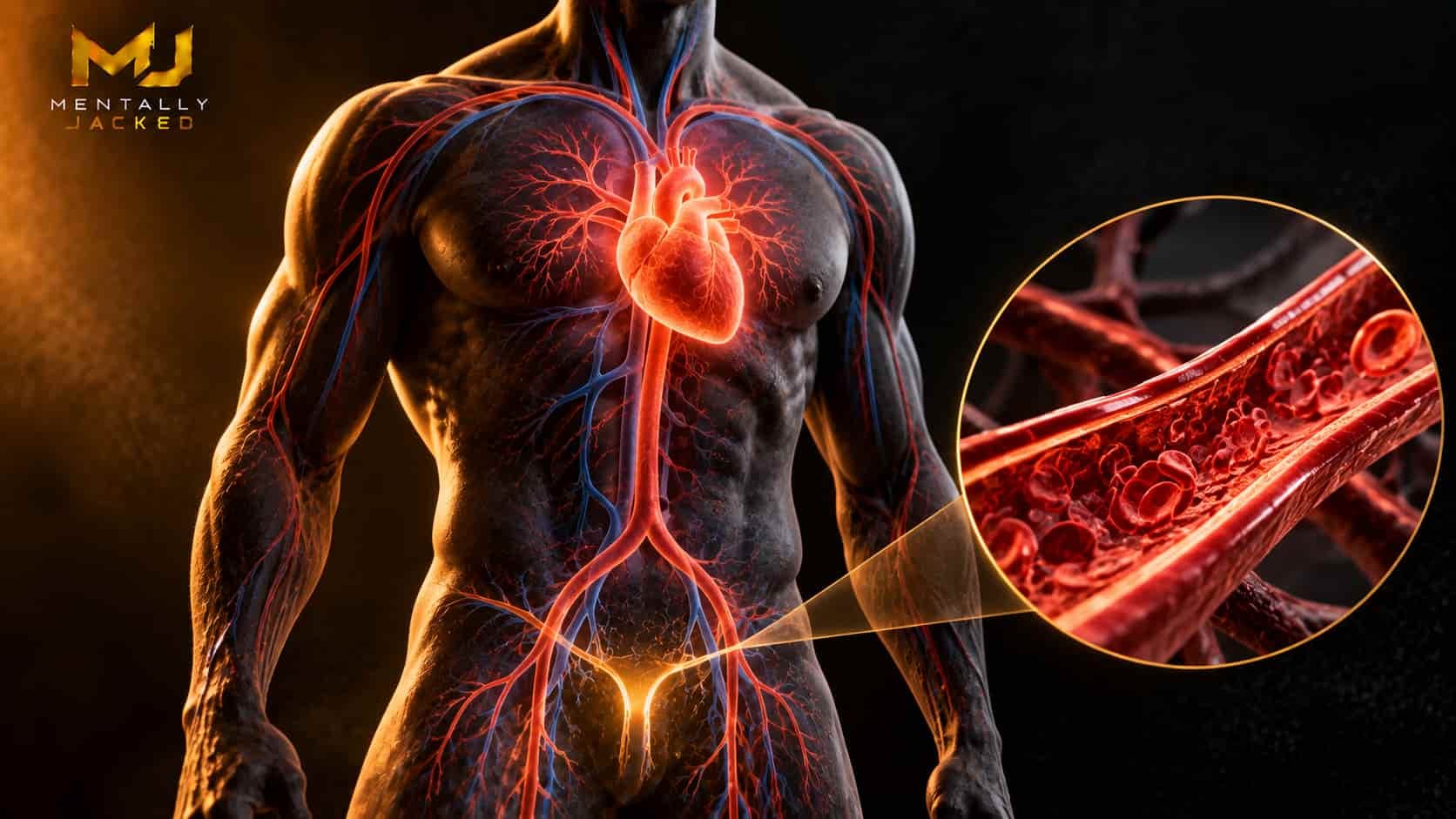
An erection is fundamentally a blood flow event, and the arteries supplying the penis are small, around 1 to 2 millimetres across. The coronary arteries supplying the heart are around 3 to 4 millimetres.
When the lining of blood vessels starts to go wrong, through smoking, high blood sugar, high blood pressure or poor cholesterol, the same process affects arteries throughout the body. The smaller arteries show the effect first.
That is why erectile dysfunction can appear years before a heart problem, and why it is increasingly treated as an early warning sign of cardiovascular disease rather than an isolated issue. In a young man with vascular risk factors, it deserves to be taken seriously as a signal. The cardiac risk score looks across seven domains including blood pressure, lipids and glucose, which is exactly this territory.
Low testosterone is the cause people suspect first, and it is less often the main driver than they expect. Low testosterone tends to reduce desire before it reduces erections. A man with a strong libido and failing erections is less likely to have a primarily hormonal problem.
Other hormonal causes worth checking:
For men who have used anabolic steroids, erectile and libido problems after stopping are common and often predictable. Exogenous androgens shut down natural testosterone production, and recovery can take months, sometimes longer. Some compounds, particularly nineteen-nor compounds such as nandrolone, are known for sexual side effects that can persist. The PCT and recovery protocol builder maps recovery timelines by compound and ester.
Several common medications can affect erections, including some antidepressants, particularly SSRIs, certain blood pressure medications, and finasteride in a minority of men. Never stop a prescribed medication on your own, but it is worth raising with the prescriber.
Performance anxiety, depression, relationship stress and a cycle of worry after one bad experience are all genuine causes. They are also treatable, and a sex therapist or counsellor can help considerably.
The point is not that psychological causes are rare. It is that they should be the conclusion after physical causes have been considered, not the default assumption.
A sensible starting panel:
The blood test selector builds this panel from your symptoms, and the ED root cause finder works through eight mechanisms, from vascular to hormonal to psychological, and ranks which is most likely in your case.
Medicines such as sildenafil and tadalafil work well for many men and are prescription medicines. They improve blood flow to produce an erection. What they do not do is treat the cause. If the cause is vascular or metabolic, the pill can mask an early warning sign while the underlying problem continues, which is the strongest argument for investigating first.
The encouraging part is that many causes respond to changes within your control:
These changes take weeks to months. They also protect the heart, which is the one thing a pill cannot do.
Erectile dysfunction in young men is common and not always psychological. Check morning erections first. Take vascular health seriously, because small arteries show problems before the heart does. Test glucose, lipids, testosterone, prolactin and thyroid, and treat the pill as a fix for the symptom rather than an answer.
More common than most people assume. In one study of men seeking help for new erectile problems, around one in four was under 40.
Morning erections are the best free clue. If they are present and firm, the physical systems are broadly working, which points toward a psychological or situational cause. Reduced or absent morning erections point toward a physical cause.
Yes. The penile arteries are smaller than the coronary arteries, so vascular problems often show up there first. Erectile dysfunction can appear years before a cardiovascular event.
It can contribute, but low testosterone usually reduces sex drive before it affects erections. Strong desire with failing erections points more toward a vascular or other cause.
Fasting glucose and HbA1c, a lipid panel, morning testosterone with SHBG, prolactin and TSH, alongside a proper blood pressure reading.
Yes, particularly after stopping, when natural testosterone production is suppressed. Some compounds, especially nineteen-nor compounds, are known for sexual side effects, and crushing oestradiol with an aromatase inhibitor is another common cause.
This article is educational and is not medical advice. See the medical disclaimer.
Want a programme built around your own numbers?
Work With Dinesh
Newsletter
One email when a new guide, calculator or breakdown goes live. Nothing else.