Supplements
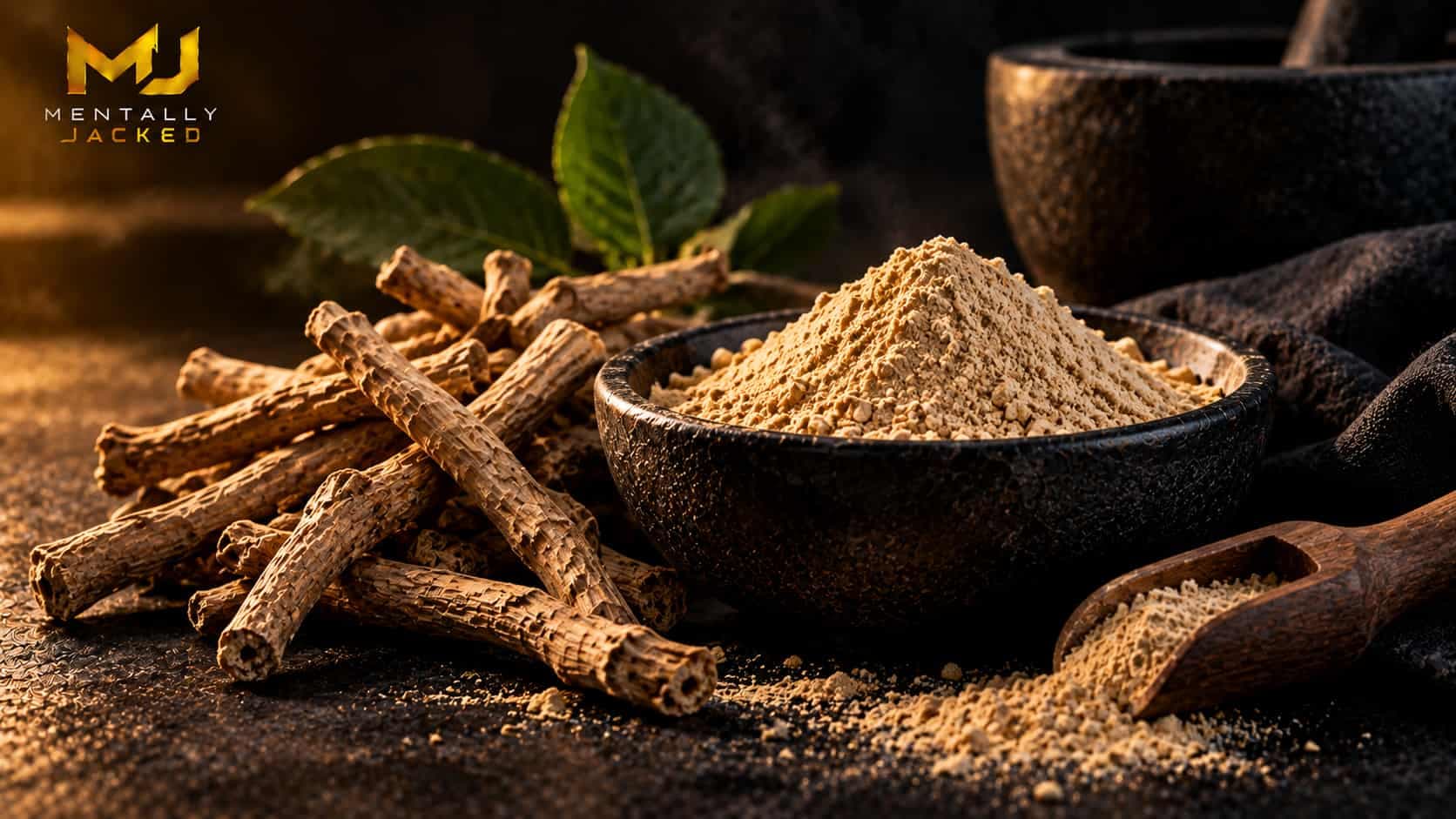
Ashwagandha is one of the few herbal supplements that has been tested in properly controlled human trials, and some of those trials are genuinely positive. It is also sold with claims that run well beyond what those trials found.
Here is what holds up, what does not, and the safety points that rarely make it onto the label.
Ashwagandha, Withania somnifera, is a shrub used in Ayurvedic medicine for centuries. The root is the part used in most modern supplements, and its active compounds are a group called withanolides.
Products vary enormously in how much root, how much extract and how many withanolides they contain. That variation is the first reason results differ so much between people.
Most of the stronger trials used standardised extracts rather than raw powder:
If a product does not name its extract or state its withanolide content, you cannot compare it with the research.
This is where ashwagandha performs best. Several randomised controlled trials in stressed adults have found reductions in perceived stress scores and in serum cortisol compared with placebo. One frequently cited trial using 600 mg of KSM-66 daily reported a cortisol reduction of around a quarter over 60 days.
These are modest, real effects in people who started out stressed. It is not a tranquilliser, and people who are not particularly stressed tend to notice less.
Several trials report improvements in sleep quality and in time taken to fall asleep, particularly in people with poor sleep or insomnia to begin with. The effects are modest and build over weeks rather than working on the first night.
A 2015 trial by Wankhede and colleagues gave young men 600 mg of KSM-66 daily alongside an eight-week resistance training programme. The ashwagandha group gained more strength and more arm and chest size than the placebo group.
It is one trial of modest size, partly supported by later small studies. Worth knowing about. Not enough to call it an established muscle-building supplement.
This is where the claims run furthest ahead of the evidence. Several small trials have reported testosterone increases with ashwagandha, often in the range of around 10 to 20 percent.
Look at who was studied, though: frequently men with high stress, subfertility or excess weight. A man whose testosterone is low-normal because he is stressed and sleeping badly may see a rise as those improve. There is no good evidence that ashwagandha produces meaningful increases in healthy, well-rested men with normal testosterone, and it is not in any sense comparable to hormone therapy.
If testosterone is your real concern, test it properly first. The blood test selector builds the right panel, including SHBG, which most packages leave out.
Ashwagandha is generally well tolerated in trials lasting up to a few months. Several issues are still worth knowing.
Liver. There are case reports of drug-induced liver injury linked to ashwagandha, some requiring hospital treatment. They are rare, but regulators have taken note: Denmark's food authority moved to restrict it in supplements over safety concerns. If you develop yellowing skin or eyes, dark urine or pale stools, stop and see a doctor.
Thyroid. Ashwagandha can raise thyroid hormone levels. That is a potential problem for anyone with an overactive thyroid, and it can shift results for people on thyroid medication. Mention it whenever your thyroid is tested. The thyroid assessment reads a panel in context rather than one number at a time.
Pregnancy. Avoid it.
Autoimmune conditions and immune-suppressing medication. It may stimulate immune activity, so check with your doctor first.
Sedatives. It may add to the effect of sedative medication.
If you take it long term and have regular bloodwork, include liver enzymes. The bloodwork analyzer reads them in context rather than flagging a single number.
Most positive trials used 300 to 600 mg per day of a standardised root extract, often split into two doses. Effects on stress and sleep generally took several weeks to appear.
Timing matters less than consistency. Many people take it in the evening because of the sleep effects. The idea that you must cycle it on and off is common and not established by research. What is sensible is reviewing whether it is still doing anything useful after a few months.
The third point is the one most products fail. If you want a standardised root extract with the form and dose stated plainly, God of Supps stocks a KSM-66 ashwagandha. Whatever you buy, the rule holds: if the extract and the dose are not on the label, you cannot know what you are taking.
Ashwagandha has reasonable evidence for lowering stress and cortisol and for improving sleep, and some early evidence for strength gains alongside training. Testosterone effects are modest and seen mostly in stressed or subfertile men. Take a named, standardised root extract at 300 to 600 mg a day, and respect the liver, thyroid and pregnancy cautions.
The strongest evidence is for reducing perceived stress and cortisol, and for improving sleep quality, mainly in people who were stressed or sleeping poorly to begin with. There is also early evidence for improved strength alongside training.
Small trials have shown modest increases, mostly in men who were stressed, overweight or subfertile. There is no good evidence of meaningful increases in healthy men with normal testosterone.
A root-only ashwagandha extract standardised to around 5 percent withanolides. It is used in many of the published human trials, which makes it the easiest form to compare with the research.
Most positive trials used 300 to 600 mg per day of a standardised root extract. Effects usually take several weeks to appear.
It is generally well tolerated in short trials, but there are rare case reports of liver injury, it can raise thyroid hormone levels, and it should be avoided in pregnancy. People with thyroid or autoimmune conditions should check with a doctor first.
Cycling is widely recommended online but is not established by research. It is sensible to review whether it is still helping after a few months.
This article is educational and is not medical advice. See the medical disclaimer.
Want a programme built around your own numbers?
Work With Dinesh
Newsletter
One email when a new guide, calculator or breakdown goes live. Nothing else.