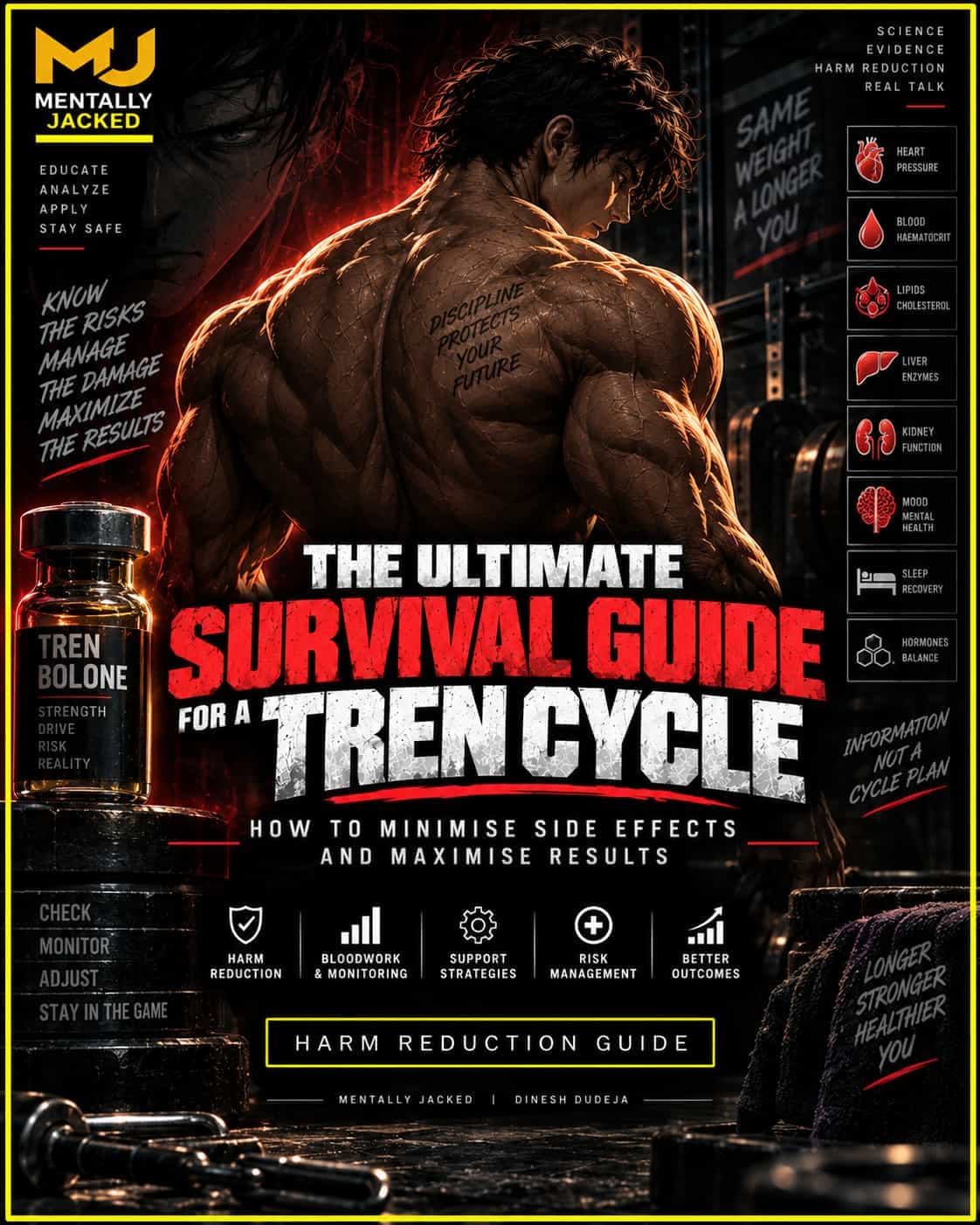
A harm-reduction guide examining trenbolone’s cardiovascular, blood, lipid, kidney, liver, sleep and hormonal risks, with bloodwork, monitoring, warning signs and evidence-graded support strategies.
70 min read
Trenbolone is widely discussed for its effects on physique and performance, but many of its most important risks cannot be judged by how you feel.
What's Inside
Built for adults seeking an evidence-led understanding of trenbolone-related health risks, bloodwork and harm reduction. It is particularly useful for readers who want to understand what their cardiovascular, lipid, liver, kidney and hormonal markers actually mean rather than relying on symptoms, gym folklore or supplement claims. This is not a cycle plan, prescription or endorsement of trenbolone use.
The Ultimate Survival Guide focuses on what may be happening underneath the visible results: blood pressure, blood viscosity, cardiovascular structure, lipids, kidney and liver markers, sleep, mood and hormonal health.
There are no anabolic doses, stacks, esters or cycle schedules. Instead, the guide focuses on understanding risk, monitoring measurable changes and recognising when something requires medical attention.
Some of the systems under the greatest stress can remain silent. The guide therefore uses baseline testing, repeat bloodwork and home blood-pressure monitoring rather than relying on symptoms alone.
Yes. Common claims around liver markers, creatinine, HDL, niacin, prolactin, estrogen control, haematocrit and support supplements are examined and corrected where the evidence does not support them.
The guide provides a structured framework for confirming the result, looking for red flags, identifying the likely driver and deciding when professional medical assessment is appropriate.
No. It deliberately does not provide anabolic doses, esters, stacks, schedules or administration instructions. Its focus is harm reduction, health monitoring and understanding the risks associated with use.
No. Several of the most important cardiovascular changes can progress without obvious symptoms. The guide therefore places heavy emphasis on objective measurements such as blood pressure and bloodwork.
The monitoring framework covers blood pressure, haematocrit and haemoglobin, ferritin, ApoB, a full lipid panel, Lipoprotein(a), hs-CRP, liver markers and additional kidney and hormonal testing.
No. The guide treats supplements as secondary tools rather than protection against the underlying exposure. It repeatedly emphasises that support supplements do not neutralise cardiovascular or other health risks.
This guide is for educational purposes only and is not medical advice.

Newsletter
One email when a new guide, calculator or breakdown goes live. Nothing else.