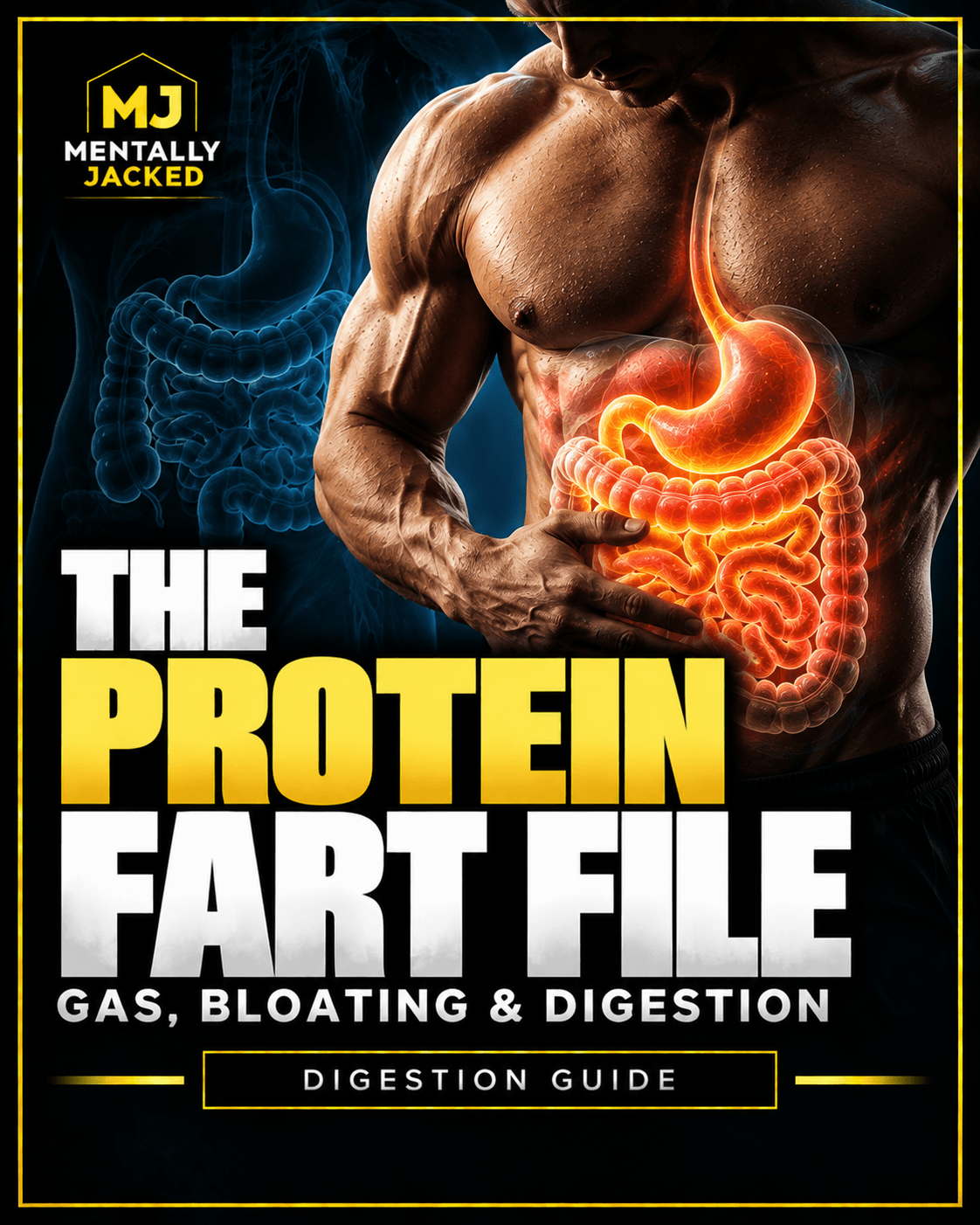
A practical digestive guide for lifters covering gas, bloating, reflux, constipation, food intolerances, whey protein, meal timing and gut management on high-protein diets.
35 min read
Get The PDFHigh-protein diets are essential for many lifters, but they can also come with gas, bloating, reflux, constipation and other digestive problems. The Protein Fart File is a practical troubleshooting guide that helps you identify likely triggers and improve digestion without immediately blaming protein itself.
What's Inside
Written for lifters, physique athletes and high-protein dieters who regularly experience gas, bloating, reflux, constipation, loose stools or other digestive problems. It is especially useful for people consuming large amounts of protein, using whey supplements, managing demanding training diets or trying to identify which foods, supplements or eating habits are triggering digestive symptoms.
The problem is not always protein itself. Whey concentrate, lactose, artificial sweeteners, large meals, rapid eating, sudden fiber changes and certain supplements can all contribute to digestive symptoms.
Start with the symptom, identify likely triggers and change one variable at a time. The guide provides a structured approach for troubleshooting gas, bloating, reflux, constipation, loose stools and food intolerances.
Yes. Different protein sources can be tolerated differently. The guide explains whey concentrate, isolate and hydrolyzed whey, and how to test whether lactose or your protein powder may be contributing to symptoms.
Meal size, eating speed, chewing, hydration, fiber intake and peri-workout food timing can all affect digestion. Fixing these basics may solve problems before digestive supplements are necessary.
The guide finishes with a structured 30-day approach for simplifying your diet, controlling variables, monitoring symptoms and gradually identifying which foods or habits may be causing digestive problems.
Protein itself may not be the only cause. Whey concentrate, lactose, artificial sweeteners, rapid eating, sudden fiber changes and very large protein servings can all contribute to excessive gas. The guide focuses on identifying the specific trigger before reducing overall protein intake.
Potentially. Whey concentrate contains more lactose than whey isolate, so people who have difficulty digesting lactose may tolerate isolate or hydrolyzed whey better. Testing the protein source as a single variable can help determine whether whey concentrate is contributing to symptoms.
Bloating can result from lactose, sodium fluctuations, large refeeds, glycogen and water storage, slower gut motility or high-FODMAP foods. A visibly distended stomach therefore does not necessarily mean that your overall diet is unhealthy.
Yes. Rapid eating can increase swallowed air and reduce proper chewing, increasing digestive workload. The guide therefore treats slower eating and thorough chewing as important first-line lifestyle changes before adding digestive supplements.
This guide is for educational purposes only and is not medical advice.

Newsletter
One email when a new guide, calculator or breakdown goes live. Nothing else.