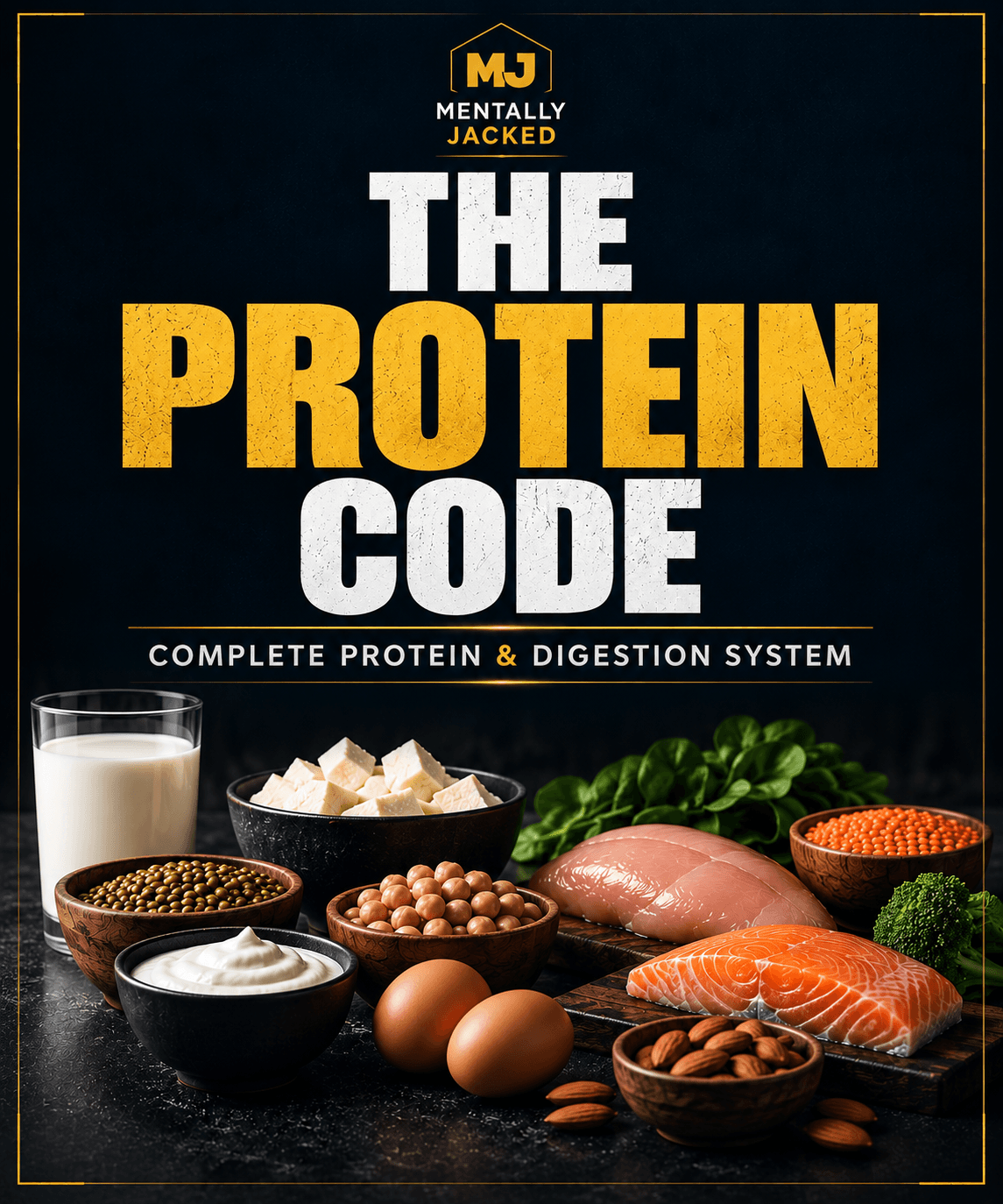
A practical Indian protein guide covering daily targets, leucine, food quality, vegetarian, non-vegetarian and vegan meal plans, swaps and digestion.
40 min read
Get The PDFThe Protein Code is a practical Indian protein and digestion system designed to help you calculate how much protein you need, choose better protein sources and distribute your intake effectively throughout the day. It combines Indian food databases, ready-made meal plans, leucine and protein-quality guidance, food swaps and digestion strategies so you can build a high-protein diet that actually works in real life.
What's Inside
Written for lifters and active adults who want to understand how much protein they need and how to achieve that target using practical Indian foods. It is suitable for vegetarian, non-vegetarian and vegan diets, especially for people who struggle with food selection, meal distribution or digestion when increasing protein intake. This is a protein education and planning guide, not a complete calorie or fat-loss diet.
Your protein target should depend on your bodyweight and goal rather than a single number that applies to everyone.
The guide explains different protein ranges for general health, maintaining muscle, building muscle and dieting. Once you know your target, you can use the food databases and meal plans to translate that number into actual food.
Daily protein intake is only part of the system. The guide also explains the leucine trigger and why distributing protein across meals matters.
You’ll learn how different foods compare for leucine, protein quality and digestibility, and how to build meals that provide a meaningful protein serving instead of simply chasing a large daily total.
The guide contains separate protein databases for non-vegetarian, vegetarian and vegan foods.
Foods are compared using protein, leucine, protein quality and digestion so you can understand the practical differences between options such as chicken, eggs, paneer, hung curd, whey, soya, tofu, dals and other common Indian foods.
Yes. The guide contains calculated daily plans across vegetarian, non-vegetarian and vegan diets with protein targets ranging from 100 to 250 grams.
The plans are designed as examples that can be adapted rather than rigid diets that must be followed exactly.
Dedicated swap sections show how to replace protein foods while keeping the protein contribution similar.
There are separate vegetarian, non-vegetarian and vegan swaps, along with practical options for travel, hostels and situations where you do not have access to a kitchen.
A major section of the guide is dedicated to digestion. It explains common reasons high-protein diets can cause heaviness, gas or bloating and provides food-specific strategies for dealing with them.
The guide also includes a digestion ladder, a fourteen-day gut ramp and practical guidance for increasing protein gradually rather than making a large jump overnight.
Once you understand your target, protein quality, leucine, food selection and digestion, the final sections teach you how to build your own day.
The goal is to eventually stop relying on fixed meal plans and have enough knowledge to construct and adjust your protein intake around your own bodyweight, diet preference, budget and lifestyle.
The guide uses approximately 1.6–2.0 g of protein per kilogram of bodyweight as the range for most lifters focused on building muscle. Your exact target should still be selected according to your goal and circumstances.
Yes. The guide shows how foods such as paneer, hung curd, soya and whey can form the foundation of a high-protein vegetarian diet, with calculated vegetarian plans reaching up to 250 g of protein per day.
Yes. It includes separate vegetarian, non-vegetarian and vegan plans covering daily protein targets from 100 g to 250 g, along with food swaps for each diet type.
The guide helps identify common causes such as lactose, fermentable sugars in legumes, sulphur-rich foods, fibre changes and increasing protein too quickly. It then provides food-specific digestion fixes and a gradual gut-ramp approach.
This guide is for educational purposes only and is not medical advice.

Newsletter
One email when a new guide, calculator or breakdown goes live. Nothing else.