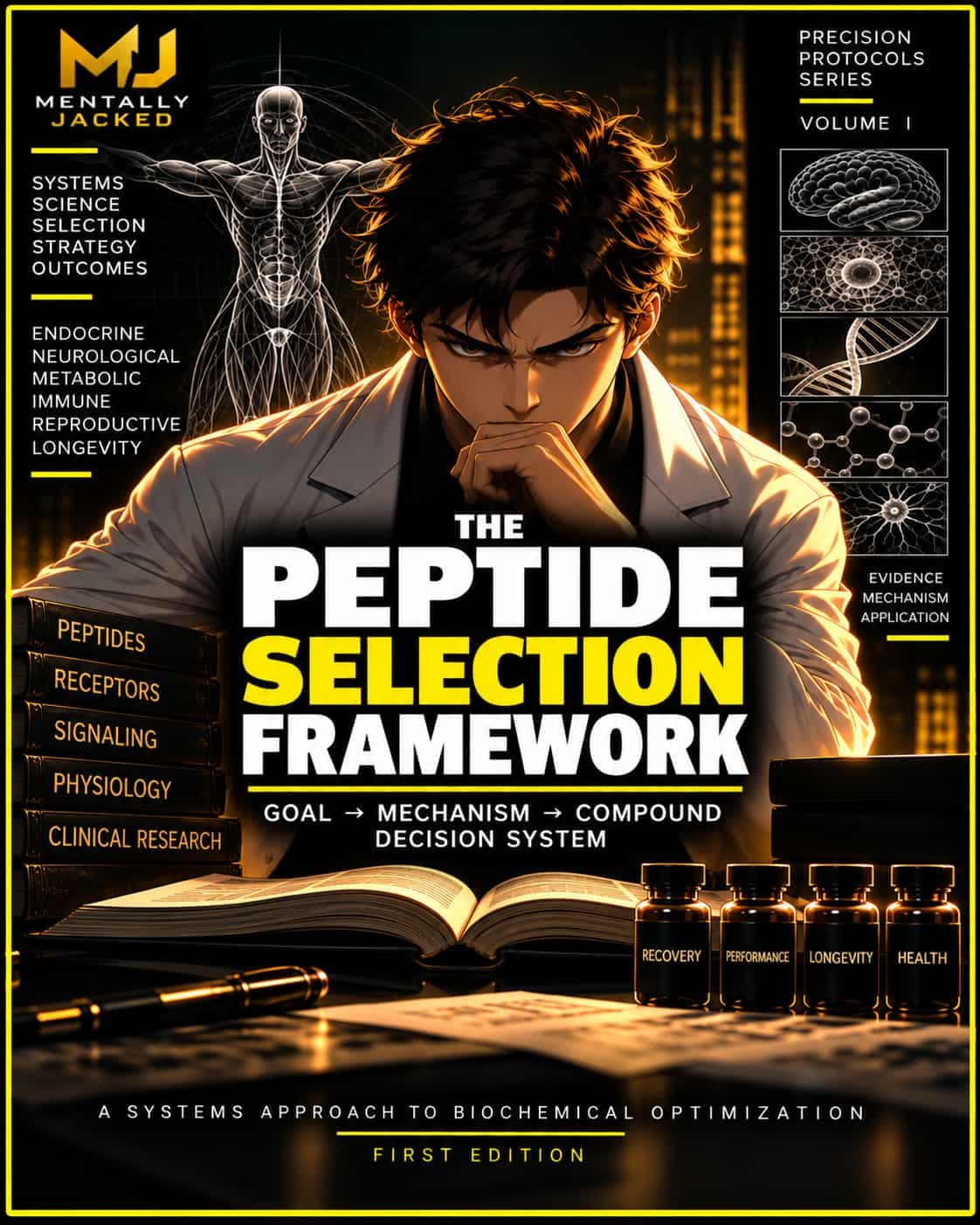
An advanced educational peptide framework covering biological systems, mechanism selection, receptor dynamics, goal-based decision trees, stack design, safety, bloodwork and monitoring.
60 min read
The Peptide Selection Framework teaches a system-first approach to peptide education. Instead of choosing a compound first, it starts with the biological limitation, identifies the relevant pathway and then evaluates the most appropriate intervention layer.
What's Inside
Built for readers with a strong interest in peptide physiology who want to understand how compounds are evaluated by system, mechanism and risk rather than simply reading a list of peptides. It is intended for educational use alongside appropriate clinical supervision, baseline bloodwork and a defined monitoring plan.
Symptoms are grouped into patterns and mapped to one of the major biological systems before any compound is considered.
The guide covers GH and IGF signalling, healing and regeneration, cognition, metabolic control, longevity, immune function, hormonal and libido pathways, research-only compounds and skin-related applications.
Yes. Dedicated decision systems cover fat loss, muscle growth, injury recovery, cognitive optimisation and hormonal or libido goals.
Every compound must have a defined role such as base, support, protection or optimisation, with attention to receptor adaptation, interactions, bloodwork and cross-system effects.
Start with the goal, but do not jump directly to a compound. The framework first identifies the limiting biological system and mechanism, then selects the compound layer last.
Yes. It explains stack architecture using defined roles such as base, support, protection and optimisation, while avoiding unnecessary duplicate mechanisms and conflicting signals.
Yes. The decision-tree system covers fat loss, muscle growth, healing and injury, cognitive optimisation, and libido or hormonal goals.
The guide calls for baseline bloodwork, physician supervision and a written stop plan before beginning any intervention, with ongoing biomarker monitoring used to guide decisions.
This guide is for educational purposes only and is not medical advice.

Newsletter
One email when a new guide, calculator or breakdown goes live. Nothing else.