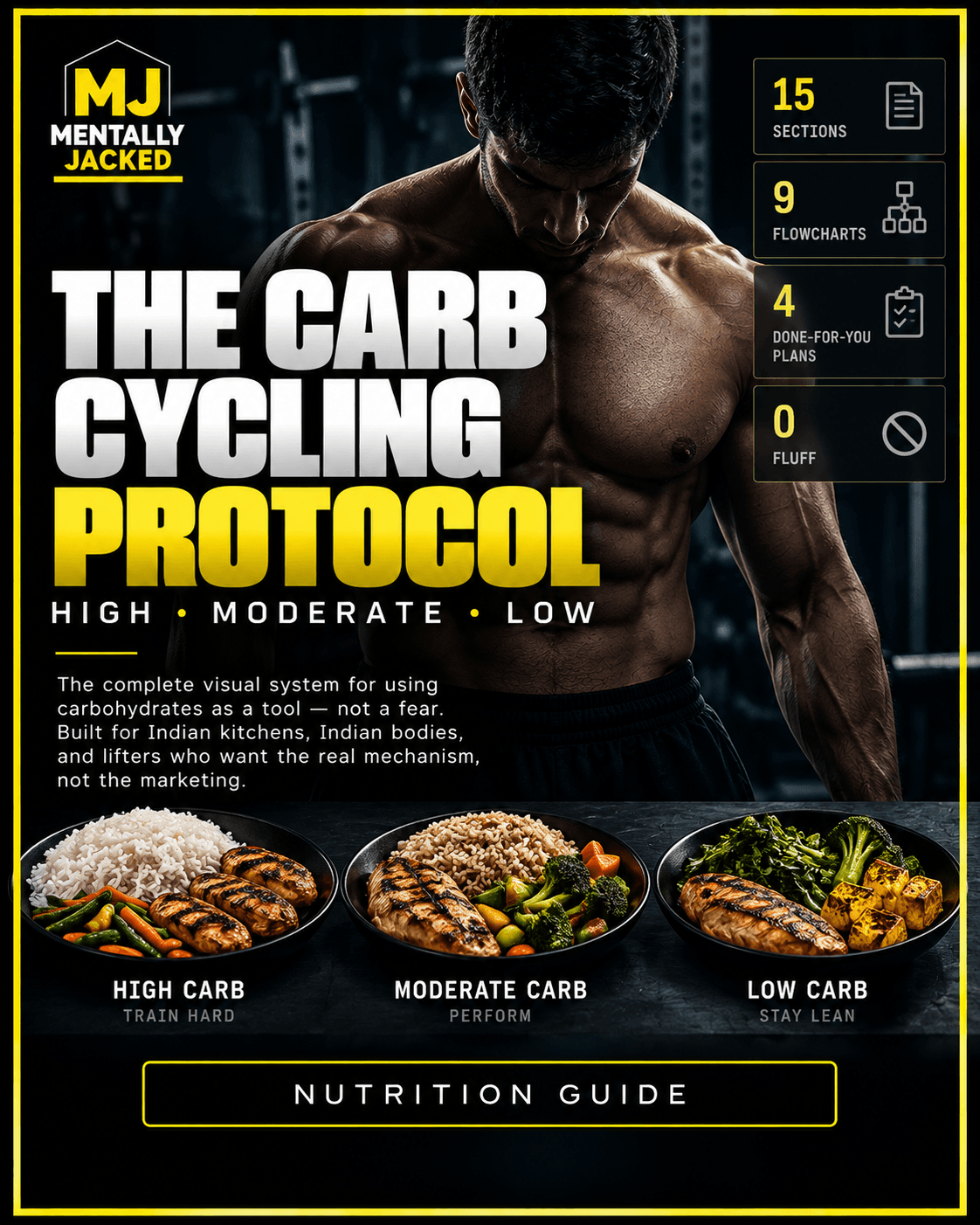
A practical carb cycling guide covering high, moderate and low days, weekly calorie setup, training-day carb placement, Indian food tracking, refeeds, plateaus and done-for-you plans.
60 min read
Get The PDFCarb cycling changes carbohydrate intake according to training demand instead of eating the same amount every day. The goal is to place more fuel where it improves performance and use lower-carb days when demand is lower.
What's Inside
Built for trained lifters who can consistently track food and macros and want a more structured way to distribute carbohydrates around training. It is especially practical for Indian diets, with household serving sizes, familiar food options and complete high, moderate and low day examples.
High days are placed around your hardest sessions, moderate days around normal training and low days around rest, cardio or lighter work.
Protein stays fixed while weekly calories, carbohydrate intake and fat intake are adjusted across the three day types according to your goal and bodyweight.
The guide places a large share of daily carbohydrates around training, especially before and after the session, while keeping food selection matched to digestion and performance.
Weekly weight averages, waist measurements, gym performance, fullness, sleep and hunger are tracked before making changes. The guide recommends changing one variable at a time.
No. The guide treats accurate food and macro tracking as a basic requirement. If you cannot consistently weigh and log food, it recommends using a simpler flat-calorie approach instead.
Poorly. The system is built around matching carbohydrate intake to glycogen demand from training, so without meaningful training there is much less reason to cycle high and low days.
The guide suggests running a phase for around 8–12 weeks, followed by a short maintenance diet break before starting another phase.
Changes in muscle fullness may appear within several days, while meaningful visual changes should be judged over several weeks rather than from the first few days.
This guide is for educational purposes only and is not medical advice.

Newsletter
One email when a new guide, calculator or breakdown goes live. Nothing else.