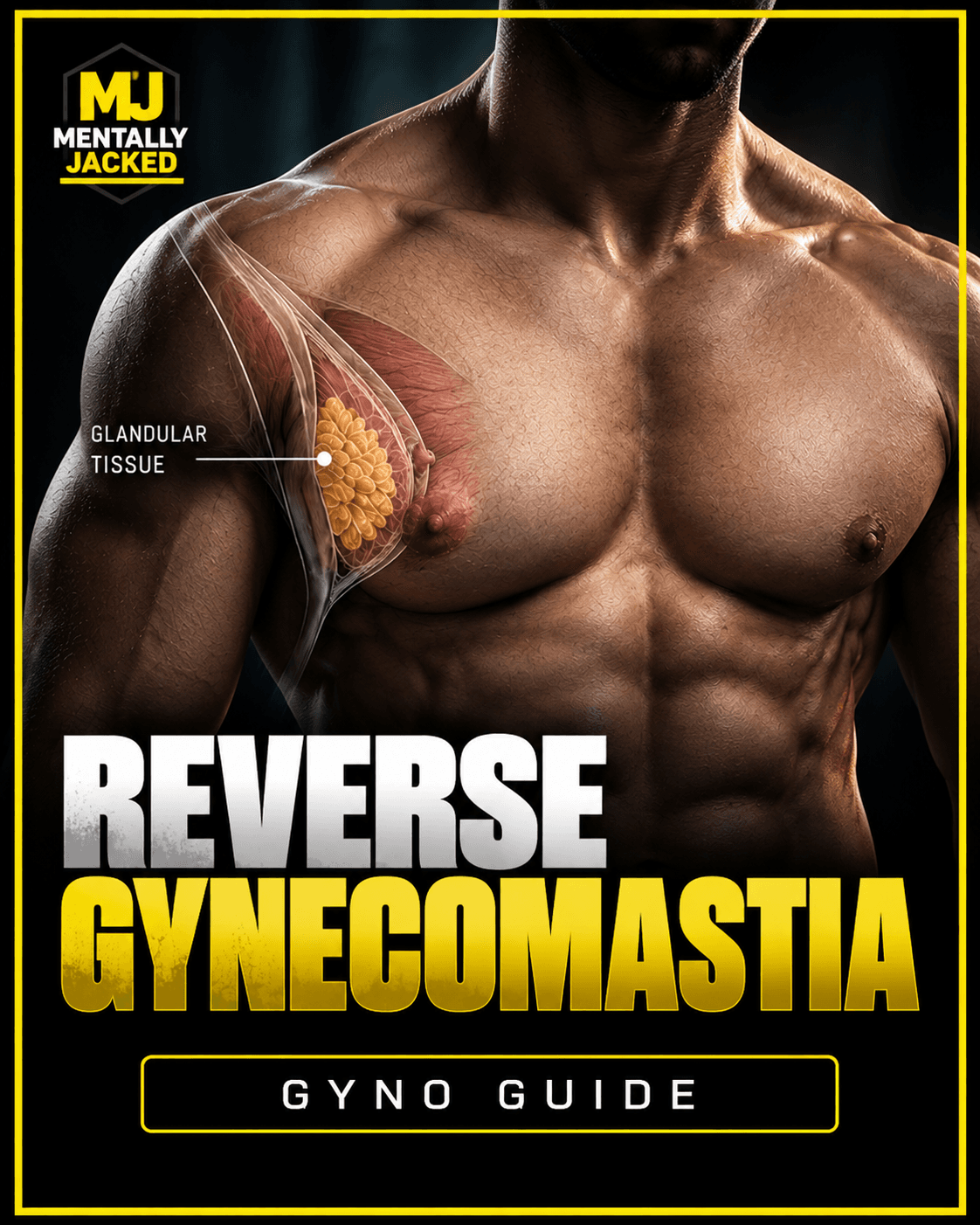
A comprehensive gynecomastia guide covering glandular vs pseudo gyno, hormonal causes, bloodwork, imaging, reversal options, surgical thresholds, monitoring and recurrence prevention.
60 min read
Get The PDFGynecomastia is not simply “high estrogen.” Correct management starts by identifying what tissue is present, what is driving it and whether it is still realistically reversible.
What's Inside
Built primarily for enhanced athletes dealing with new, persistent or recurrent gynecomastia who want to understand the condition before making treatment decisions. It is an educational and harm-reduction resource — not a substitute for medical diagnosis, prescription or surgical evaluation.
The guide separates true glandular gynecomastia, pseudogynecomastia and mixed presentations before any treatment decision is made.
Possible drivers include altered estrogen-androgen signalling, anabolic compounds, post-cycle hormonal changes, prolactin, body fat, medications and underlying endocrine or metabolic conditions.
The diagnostic framework combines physical assessment with hormonal and metabolic bloodwork, breast ultrasound and additional imaging when clinically indicated.
That depends heavily on tissue type, duration and stage. The guide explains when reversal may still be realistic and when established tissue should instead be evaluated surgically.
True glandular gyno typically feels like a firm, rubbery, defined disc beneath the nipple. Pseudogynecomastia feels softer and more diffuse, while mixed gyno contains both glandular tissue and fat.
According to the guide, sensitivity may improve before the actual tissue visibly changes. Palpable changes can take several weeks, with visible changes potentially taking longer.
The guide still recommends ultrasound as a useful baseline because it confirms the tissue involved and gives you an objective comparison point for later reassessment.
Yes. Recurrence is possible if the underlying hormonal, medication, body-fat or performance-enhancing-drug driver returns. Long-term prevention therefore remains important even after successful treatment.
This guide is for educational purposes only and is not medical advice.

Newsletter
One email when a new guide, calculator or breakdown goes live. Nothing else.